01Define what a customer can use
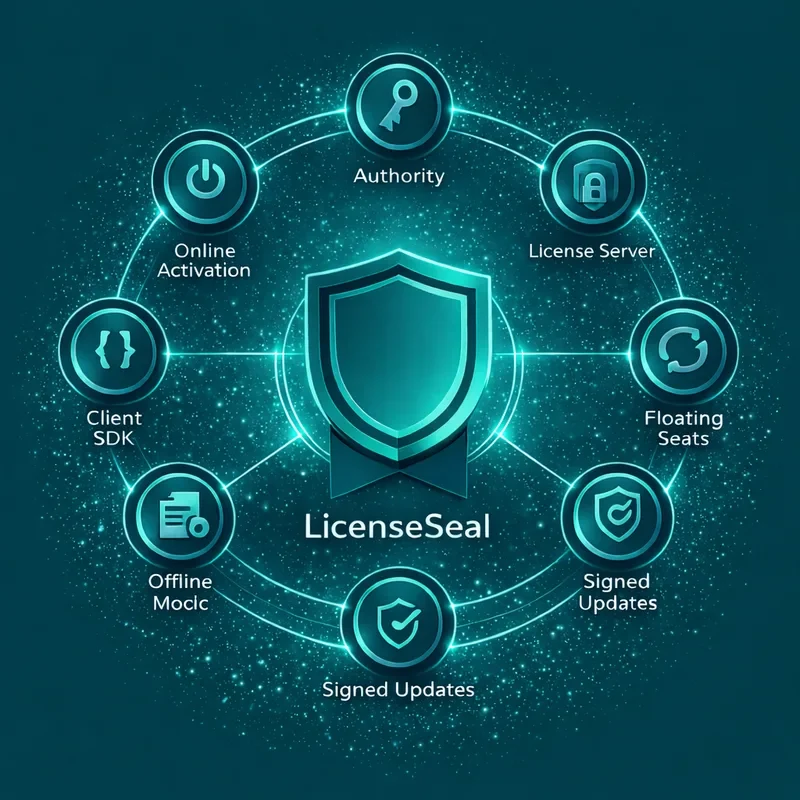
Describe products, plans and feature access in a central licensing policy instead of scattering rules through the application. Entitlements connect a licence to the capabilities a product should expose. Different packaging models let a publisher distinguish plans, features and usage allowances without treating them as the same thing.
02Control activation and device relationships
Activation records connect an issued licence to runtime use. Node-locked models associate access with an installation or device; seat-based models govern concurrent users or instances. Recovery and replacement workflows matter as much as enforcement, especially when support staff need to understand what happened after a customer changes a machine.
03Plan for offline environments
Some customers cannot keep software connected to a licensing service. The design includes signed licence material and offline validation alongside connected checks. Publishers choose expiry, verification and recovery rules. Air-gapped or intermittently connected installations need these decisions during integration, rather than as an exception after the application has shipped.
04Manage floating seats and leases
A floating model tracks occupied seats and makes them available when sessions finish or leases expire. Lease and recovery behaviour affect both licence protection and the user’s ability to return to work. Explicit seat controls distinguish a valid reservation, active use and the conditions for releasing access.
05Make trust and signing deliberate
Signed tokens and trust material support verification in the client and runtime server. Key rotation, server-side signing responsibilities and audit information belong to the design. SDK integration should verify the material it receives and handle agreed failure states. Security and deployment review remain part of engineering the complete solution.
06Fit licensing into product operations
APIs, SDK integration, activation history and operational controls connect licensing to commercial and support workflows. SaaS, hybrid and self-hosted deployment are part of the intended architecture. LicenseSeal remains in development: confirm the supported runtime, readiness and integration scope before relying on it for a production rollout.